
How I Finally Found Relief After 9 Years of Lower Back Pain
Sandra MitchellSandra M. | Health & WellnessHealth |

For almost a decade, I woke up the same way every morning—stiff, aching, and dreading the moment my feet hit the floor.
My lower back had been a problem since my late 40s. Nothing dramatic caused it. No car accident, no fall. Just years of sitting at a desk, carrying grandkids, bending over in the garden. Normal life. But somewhere along the way, my body started punishing me for it.
By last year, at 58, I'd tried everything. Heating pads that helped for 20 minutes then did nothing. Chiropractor visits twice a month ($90 a pop). Physical therapy that ate up my Tuesday and Thursday afternoons. Creams, patches, massages—I have a drawer full of things that promised relief and delivered disappointment.
I was spending over $400 a month just trying to function.
But the worst part wasn't the money. It was what the pain took from me.
The Moment I Knew Something Had to Change
Last Thanksgiving, my 6-year-old grandson Mason ran up to me and asked if I could help him build a puzzle on the living room floor.
I had to tell him no. I couldn't get down there. And even if I could, I wouldn't be able to get back up without making a scene.
He didn't understand. He just looked at me with those big brown eyes like I'd rejected him.
I went to bed that night and cried. Not from the pain in my back—from the pain of watching my life shrink. Of becoming the grandmother who sits in the chair and watches instead of the one who plays.
I promised myself I'd find something. Anything.

Then My Neighbor Said Something That Changed Everything
A few weeks later, I was grabbing the mail when I ran into Diane from three doors down. She's 67, and I'd always noticed she moved well—walking her dog every morning, working in her yard, never seeming to slow down.
"How do you do it?" I finally asked her. "Your back doesn't bother you?"
She laughed. "Oh, it used to. Herniated disc five years ago. I could barely walk to the mailbox."
I figured she might mention a specialist or some expensive treatment. But she didn’t.
"It's going to sound strange," she said, "but I use this red light therapy wrap. My daughter's a physical therapist—she got me one. I thought it was ridiculous at first. But I've used it every night for four years now. Changed my life."
Red light therapy? I'd heard of it vaguely—something celebrities did at fancy spas. I didn't even know you could do it at home.
But Diane looked so good. And she had no reason to lie to me.
That night, I did my research.
What I Discovered About Red Light Therapy Surprised Me
Here’s what I learned: red light therapy isn’t some passing trend. It has been explored for decades in different wellness and research settings, including early work by organizations like NASA looking at how light could support tissue and recovery in challenging environments.
The science is actually pretty simple. Inside every cell in your body are tiny structures called mitochondria—they're basically the batteries that power everything you do. When you're injured, inflamed, or just getting older, those batteries don't work as well. You heal slower. You ache more. You feel stiff and tired.
Red light therapy is believed to interact with those cellular batteries. Specific wavelengths of red and near-infrared light are designed to pass through the skin and reach the tissue underneath. Many experts think this kind of light exposure can support normal cellular energy processes and the body’s built-in recovery routines.
It’s not like a heating pad that just warms the surface and fades away after a while. This approach is designed to work deeper, targeting the areas that keep you feeling tight, stiff, and worn down.
Many pain specialists describe red light therapy as a supportive tool, especially for people dealing with inflammation or chronic discomfort:
By working at the cellular level—specifically within the mitochondria—red light therapy may help create better conditions for healing, tissue recovery, and natural pain relief when used consistently over time.
The more I read, the more I wanted to try it. But the devices I found were either flimsy junk or cost $500+.
Then I found the Glokore Therapy Wrap.
Why I Chose Glokore (And Why It's Different)
The Glokore Wrap stood out for a few reasons.
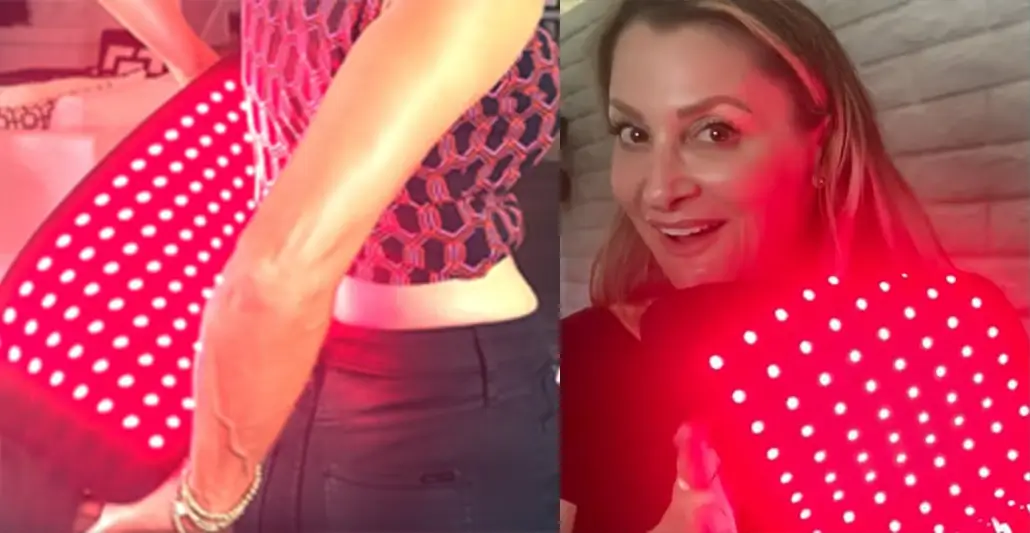
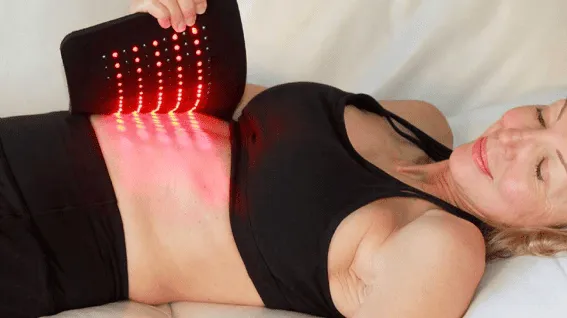
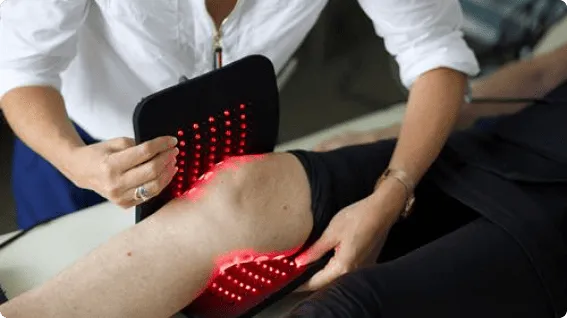
First, it's not a handheld wand you have to hold in place for 30 minutes. It's a flexible wrap that straps around your lower back, knees, shoulders, neck—wherever you need it. You put it on, press a button, and go about your evening. Watch TV. Read a book. Fold laundry. The light does its work while you relax.
Second, it uses both red AND near-infrared light. Most cheap devices only use one. The combination means you get surface-level relief AND deeper tissue penetration.
Third, it was actually affordable. I found it on sale for around $99—less than what I was paying for ONE month of chiropractor visits.
I figured: what did I have to lose? If it didn't work, I'd return it.
I ordered one that night.
What Happened When I Started Using It
The wrap arrived three days later. I'll be honest—I was skeptical. It looked almost too simple. Just a soft, flexible pad with LED lights inside.
That first night, I wrapped it around my lower back, pressed the button, and sat down to watch Jeopardy.
The warmth was immediate—gentle, not hot. Almost like a heating pad but... different. Deeper somehow. I left it on for the full 20-minute session.
When I took it off, I didn't feel dramatically different. Maybe a little looser. I went to bed not expecting much.
But then I woke up the next morning.
For the first time in months, I didn't immediately feel that familiar tightness. I still had some stiffness—I'm not claiming a miracle cure—but something was different. Getting out of bed didn't feel like a battle.
I kept using it every evening. Here's what I noticed:
Days 1-3: Subtle warmth and relaxation during sessions. Slight improvement in morning stiffness.
Week 1: Noticeably easier to bend over. Less grabbing the counter when I stood up from chairs.
Week 2-3: This is when it really clicked. I realized I hadn't taken ibuprofen in five days. I was moving around the kitchen without thinking about my back.
Week 4 and beyond: I started doing things I'd given up on. I got down on the floor to play with Mason. I worked in my garden for an hour straight. I went for a walk around the block just because I felt like it.
I'm not saying the pain is 100% gone. I'm 58 with a decade of damage. But it went from controlling my life to being background noise I barely notice.
That's the difference.
The Moment I Knew This Was Real
Six weeks after I started using my Glokore, Mason asked me to build another puzzle.
This time, I said yes.
I got down on that living room floor with him. We spent 45 minutes putting together a 100-piece dinosaur puzzle. And when we finished, I got back up—a little slowly, sure—but I got up. No scene. No help needed.
Mason didn't say anything about it. To him, it was just normal. Grandma playing with him like grandmas should.
But I knew what it meant.
What Real Users Are Saying
I'm not the only one. Since discovering Glokore, I've found thousands of people with similar stories:
Here's What to Expect If You Try It
Based on my experience and what I've read from others, here's a realistic timeline:
First few days: You'll feel a soothing warmth during each session. Some people notice slight relief immediately after; others don't feel much yet. Both are normal.
First two weeks: Pain may start to diminish between sessions. You might notice you're reaching for pain relievers less often. Morning stiffness often improves.
After 4–6 weeks: This is when many people say they start to notice the biggest shift. Getting around can feel smoother, everyday tasks can feel less like a battle, and that constant nagging feeling may start to fade into the background.
The key is consistency. I use mine every evening for 15-20 minutes while watching TV. It's become as automatic as brushing my teeth.
Why This Isn't Like Other Things You've Tried
If you're like me, you've been burned before. Products that promise the world and deliver nothing.
Here's why Glokore is different:
It’s designed to work with your body—not against it. Instead of quick fixes that fade fast, Glokore provides a focused light session that many people use to support comfort, flexibility, and movement over time.
It works on multiple areas. Back, knees, shoulders, neck, hips—wherever you're hurting. One device, full-body flexibility.
It's designed for real life. Put it on, press start, and forget about it while you relax. No complicated settings. No holding anything in place.
For example, researchers have published reviews on photobiomodulation (low-level light therapy) and major U.S. medical centers have written educational articles on how red light may support tissue recovery and comfort.1–2
1 Hamblin MR. Overview of photobiomodulation and low-level light therapy in clinical applications.
2 MD Anderson Cancer Center – “What is red light therapy?” educational article.
Where to Get the Glokore Wrap (And the Current Discount)
You can only get the authentic Glokore Therapy Wrap from their official website.
When I bought mine, I paid full price—around $220—and honestly, it was still worth every cent compared to what I was wasting on things that didn't work.
But right now, they're running a promotion that drops the price significantly.
I've seen it as low as $99 for a single wrap, with bundle discounts up to 55% off if you want to get one for a spouse or family member (which I did—I bought a second one for my husband's shoulder).
I don't know how long this pricing lasts. Demand has been surging after word spread online, and I've seen them sell out before.
If you've been dealing with back pain, knee stiffness, joint aches, or just the general "getting older" soreness that makes everything harder than it should be—do yourself a favor and at least look into this.
I spent nine years and thousands of dollars chasing relief. If I'd found Glokore sooner, I'd have saved myself a lot of pain. Literally.